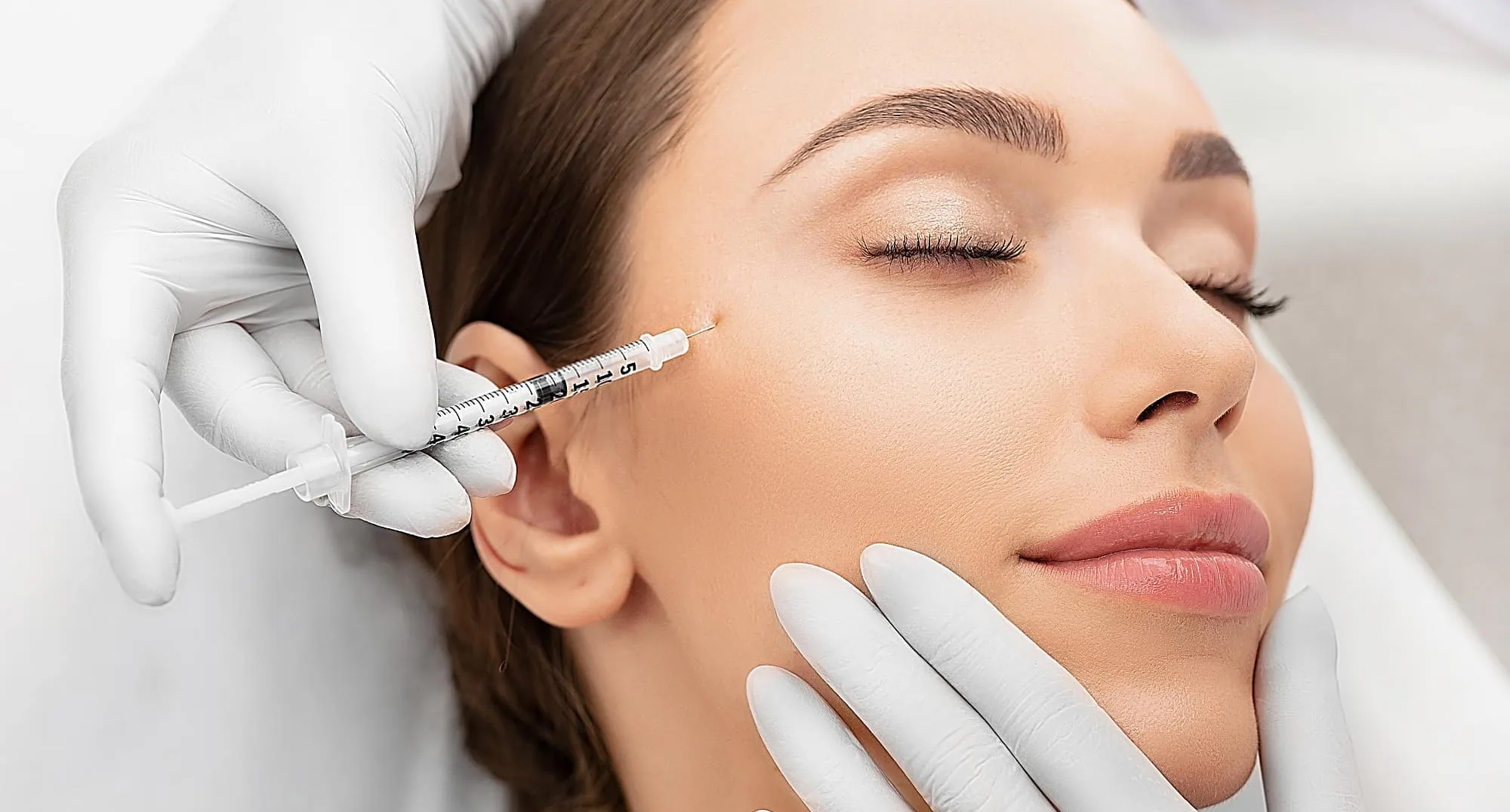
Aesthetic injectables are changing.
For many years, conversations about injectable treatments centred mainly around Botox and dermal fillers. Both remain important treatments, but we now have a much broader range of options for patients whose main concern is not necessarily a wrinkle or a loss of volume, but the quality, firmness and support of the skin itself.
This is where regenerative aesthetics is becoming particularly interesting.
Rather than treating every sign of ageing in the same way, I prefer to consider what is actually changing: skin quality, collagen, facial support, volume or muscle movement.
Once you identify the problem properly, choosing an appropriate treatment becomes much easier.
Here are five injectable treatments we’re talking about in 2026 and, importantly, what makes each one different.
1. Profhilo Structura: support beneath the skin
Profhilo Structura is different from the original Profhilo treatment many patients already know.
It has been developed to address age-related changes in the deeper tissues of the face, particularly the superficial facial fat that contributes to support and contour.
As we age, it isn’t simply the skin that changes. The tissues underneath it also change, and this can contribute to flattening through the cheeks and the early appearance of jowling.
In an appropriately selected patient, Profhilo Structura can be used with the aim of restoring some of that support without trying to create the more obvious projection associated with conventional volumising filler.
For me, it fits particularly well into the conversation about support rather than simply adding volume.
May be considered for: loss of cheek support, early tissue descent and age-related changes in the mid-face.
IBSA describes Profhilo Structura as a treatment developed specifically around restoration of facial adipose tissue and deeper facial structures. IBSA Group
2. Polynucleotides: improving skin quality gradually
Polynucleotides have become one of the most discussed treatments in regenerative aesthetics.
Unlike a traditional dermal filler, the purpose isn’t to create a new facial shape or replace a specific pocket of lost volume.
The emphasis is on skin quality.
I use polynucleotides where we are looking for gradual improvement in areas such as fine lines, crepiness, hydration and overall skin quality.
They can also be particularly useful around the eyes, where the skin is thinner and where simply adding filler is not always the answer.
The important word here is gradual. This isn’t generally a treatment where I would expect a patient to look dramatically different immediately afterwards. Improvement develops over a course of treatments.
May be considered for: crepey skin, fine lines, ageing skin and the delicate eye area.
3. Sunekos: hyaluronic acid and amino acids
Sunekos takes another approach to skin regeneration.
It combines hyaluronic acid with a specific mixture of amino acids. The formulation is designed to work with fibroblasts — the cells involved in producing components of the skin’s extracellular matrix, including collagen and elastin. Sunekos
In practice, I think of it principally as a skin-quality treatment rather than a volumising treatment.
It can be particularly interesting where the concern is fine lines or delicate, thin skin, including the area around the eyes.
Again, the aim isn’t to change the shape of somebody’s face. It is about improving the condition of the tissue.
May be considered for: fine lines, skin quality, hydration and delicate periocular skin.
4. HArmonyCa: immediate support with collagen stimulation
HArmonyCa is interesting because it combines two different approaches within one injectable.
It contains hyaluronic acid (HA) and calcium hydroxyapatite (CaHA).
The HA component provides an immediate supporting effect, while the CaHA component is used to support the body’s own collagen production over time. HArmonyCa is therefore described as a dual-action or hybrid injectable. HArmonyCa™
That makes it different from a treatment whose effect comes predominantly from adding hyaluronic-acid volume.
For the right patient, there can therefore be an immediate structural improvement followed by a more gradual change in tissue firmness as collagen develops.
May be considered for: facial support, early laxity and patients where both structure and collagen stimulation are relevant.
5. JULÄINE: gradual collagen stimulation
JULÄINE belongs to another category again.
It is based on poly-L-lactic acid, or PLLA, a material used in collagen-stimulating injectable treatments.
Rather than relying primarily on an immediate filling effect, PLLA treatments are intended to encourage a progressive tissue response and collagen production.
That means the result develops over time.
This is useful to understand because patients increasingly hear terms such as skin booster, biostimulator, collagen stimulator and regenerative injectable used almost interchangeably.
They aren’t all the same.
JULÄINE is better thought of as a collagen biostimulator rather than simply another hyaluronic-acid injectable.
Early published clinical work has evaluated JULÄINE as an injectable PLLA designed to stimulate collagen production. Wiley Online Library
What do we actually mean by a regenerative injectable?
This is probably the more important question.
“Regenerative injectable” is increasingly used as an umbrella term, but it doesn’t describe one single type of product.
Some treatments primarily improve hydration and skin quality.
Some stimulate fibroblasts and collagen production.
Some provide structural support.
And some combine more than one mechanism.
That is why I don’t believe patients should begin with:
“Which injectable should I have?”
The better question is:
“What has actually changed, and what are we trying to improve?”
The treatment should follow the diagnosis rather than the diagnosis being made to fit the treatment.
May be considered for: gradual collagen stimulation, reduced firmness and selected areas of facial laxity.
Skin regeneration doesn’t only mean injectables
Injectables are also only one part of regenerative skin treatment.
For some patients, treatments such as microneedling may be more appropriate. Microneedling works by creating controlled micro-injury within the skin, initiating a repair response and encouraging collagen remodelling.
It can be particularly useful when the main concerns are texture, fine lines, acne scarring or general skin quality.
For other patients, skincare may be the starting point.
And sometimes the best approach is a combination of treatments performed gradually rather than trying to achieve everything in one appointment.
Which injectable is best for ageing skin?
There isn’t one answer because ageing doesn’t happen in one layer of the face.
When I assess a patient, I broadly think about several different things:
Skin quality — texture, crepiness, pigmentation and fine lines.
Collagen and elasticity — how firm and resilient the tissues are.
Facial support — how the deeper tissues and fat compartments have changed.
Volume — whether genuine volume loss needs replacing.
Muscle activity — whether facial movement is contributing to lines or changes in facial shape.
Two people of exactly the same age may therefore need completely different treatment plans.
That is one reason I don’t believe in choosing an injectable because it happens to be new or popular.
The consultation comes first.
About Dr Don
Dr Don Othoro, MBChB MRCGP, is a UK-qualified medical doctor and cosmetic physician with 18 years’ experience in aesthetic medicine. He has performed more than 15,000 non-surgical aesthetic procedures.
His approach to aesthetic medicine is doctor-led, conservative and centred around safe, subtle and scientifically informed treatment.
Frequently asked questions
No.
Traditional hyaluronic-acid dermal fillers are principally used to provide volume and structural support.
Regenerative or biostimulatory injectables may instead focus on improving skin quality, encouraging collagen production or changing the condition of the tissues over time.
There is also some overlap. HArmonyCa, for example, combines hyaluronic acid with calcium hydroxyapatite and therefore has both an immediate supporting component and a collagen-stimulating component. HarmonyCa
It depends on the area and the underlying problem.
Polynucleotides, amino-acid/hyaluronic-acid treatments and collagen-stimulating injectables may all have a role in selected patients.
Crepey skin caused predominantly by loss of skin quality may require a very different treatment from significant tissue laxity, so examination is important before deciding.
A skin booster is generally used primarily to improve characteristics such as hydration and skin quality.
A collagen stimulator is intended to encourage the tissues to produce more collagen over time.
Some newer products have characteristics of both categories, which is one reason the terminology can become confusing.
Some can.
Polynucleotides and certain amino-acid-based injectable treatments may be considered for the delicate periocular area.
However, the eye area requires careful assessment because puffiness, hollowing, pigmentation, skin laxity and fine lines are different problems and aren’t treated in the same way.
This is a question I hear increasingly often.
The first thing is to establish what aspect of the neck is bothering you.
Crepey skin, horizontal neck lines, loss of firmness and prominent platysmal muscle bands are different problems.
Skin-quality treatments, collagen-stimulating approaches, microneedling and muscle-relaxing injections may therefore all have a role in different circumstances.
There isn’t one “neck injectable” that treats everything.
The main thing I would take away from all five treatments is that they don’t do the same job.
Profhilo Structura is primarily about deeper tissue support.
Polynucleotides focus on gradual improvement in skin quality.
Sunekos combines hyaluronic acid and amino acids in an approach centred around the extracellular matrix and skin quality.
HArmonyCa combines immediate support with collagen stimulation.
JULÄINE is a PLLA-based collagen-stimulating treatment.
None of that means one is “better” than another.
The appropriate treatment depends on your anatomy, skin, age-related changes, medical history and, most importantly, what we’re actually trying to improve.
My approach is always conservative.
The aim isn’t to sell somebody an injectable because it happens to be popular. It is to examine the face properly, explain what I can see and give an expert medical opinion about whether treatment is worthwhile at all.
If treatment is appropriate, we can then decide which approach is most likely to give a subtle, natural-looking result.
Book a consultation with Dr Don to discuss your skin, facial changes and the different treatment options available.
Do not add three or four different CTAs throughout the article. One restrained CTA near the end is sufficient for this type of educational page.