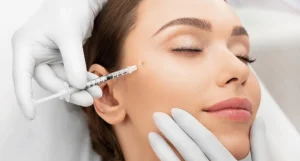
The skin around the eyes is often one of the first areas people notice changing.
You may look in the mirror and feel that your eyes seem more tired, shadowed or less smooth than before — even when you are well rested.
Common concerns people ask about include:
- Crepey or thinning under-eye skin
- Darkening or shadowing beneath the eyes
- Fine lines and texture changes
- A tired or less refreshed appearance
The good news? Not every under-eye concern is about “bags” or needing filler. In many people, the issue is actually skin quality.
Why Does The Under-Eye Area Change?
The skin around the eyes is naturally thinner and more delicate than other parts of the face.
Over time, several things happen:
1. Skin becomes thinner
Collagen and elastin naturally reduce with age, meaning the skin may feel less smooth, less firm and more fragile.
2. Hydration changes
The under-eye area can lose some of its plump, hydrated appearance, making fine lines and crepey texture more noticeable.
3. Shadowing becomes more visible
As skin quality changes, blood vessels, pigmentation or natural hollowing may become more noticeable, creating a darker or tired appearance.
4. Lifestyle and environment play a role
Sun exposure, stress, sleep quality, allergies, dehydration and genetics can all influence how the eye area looks over time.
The important thing to understand is this: not every under-eye concern is a volume problem.
For many patients, the goal is not fullness — it is fresher, healthier-looking skin.
When Is Skin Quality The Real Issue?
Many patients assume they need filler because the area looks tired.
But in reality, some people simply have:
- Thinner skin
- Fine crepey texture
- Reduced hydration
- Mild shadowing caused by skin quality changes
In these cases, a treatment focused on supporting the skin itself may sometimes be more appropriate than adding volume.
What Are Polynucleotide Treatments For The Eyes?
Polynucleotide treatments are designed to support skin quality in delicate areas such as beneath the eyes.
Rather than adding fullness, the aim is skin rejuvenation.
The focus is typically on helping support:
- Skin hydration
- Skin texture and smoothness
- Skin quality over time
- Collagen support in the treated area
The goal is usually subtle and natural: a fresher, healthier and smoother appearance rather than looking “done”.
For many patients, this approach appeals because it focuses on improving the quality of the skin rather than changing facial shape.
What Polynucleotides Are Not
- One common misconception is that these treatments work like filler.
- They do not aim to add volume or dramatically change facial contours.
- Instead, the intention is to support healthier-looking skin quality over time.
- This makes them attractive for patients who want a more refreshed look while maintaining a natural appearance.
Is This Treatment Right For Everyone?
Not necessarily.
The under-eye area is delicate, and the best approach depends on what is causing the concern.
Some people benefit more from skincare, sun protection and collagen-supportive treatments.
Others may benefit from different treatment approaches depending on whether the issue is volume loss, pigmentation, skin laxity or muscle-related changes.
This is why assessment matters.
Looking For Under-Eye Rejuvenation In Wimbledon or Raynes Park?
At Dr Don Aesthetics, consultations focus on understanding why the area looks tired before recommending treatment.
The aim is always subtle, natural-looking rejuvenation — helping patients look fresher, healthier and more rested without appearing overtreated.
If you would like to understand whether under-eye skin rejuvenation may be suitable for you, get in touch to arrange a consultation.
Frequently Asked Questions
Do polynucleotide treatments add fullness under the eyes?
No — the intention is generally to support skin quality, hydration and texture rather than add volume.
Are polynucleotides the same as tear trough filler?
No. Tear trough filler focuses on volume replacement, whereas polynucleotide treatments focus on skin quality.
Can crepey under-eye skin improve?
This depends on the cause. Treatment may focus on hydration, skin quality, sun protection, collagen support and personalised skincare.
How many treatments are usually needed?
Treatment plans vary depending on the individual and clinical assessment.
Related Reading
- Treatments for tired-looking eyes
- Skin quality treatments for ageing skin
- The difference between skin rejuvenation and dermal filler
- Why SPF matters for collagen support and pigmentation